How Geography Shaped Maria Mitchell
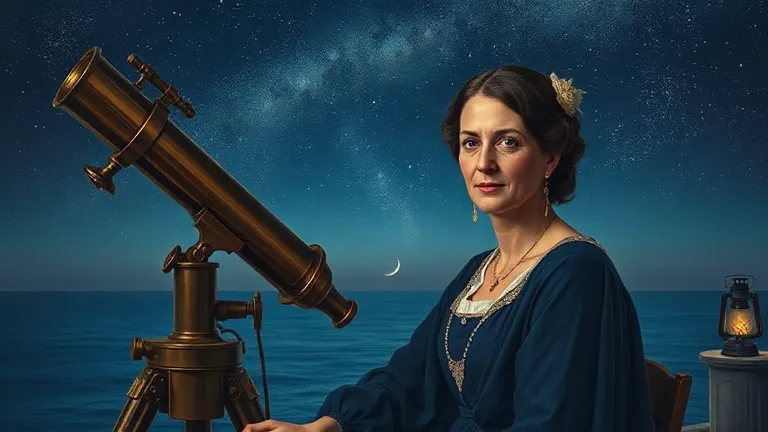
Scanning the island night sky from a rooftop observatory, this pioneering Quaker astronomer discovered a famous comet and shattered academic glass ceilings.
- Stop 1: Nantucket, United States (1818 · Rooftop Discovery)Using a two-inch telescope on a roof, she discovered Miss Mitchell's Comet, earning international scientific fame from Europe.
- Stop 2: Greenwich, England (1857 · European Science Tour)She toured prominent European observatories, visiting Royal Astronomers in Britain and collaborating with leading European mathematical scientists.
- Stop 3: Poughkeepsie, United States (1865 · Vassar Professor)Appointed the first professor of astronomy at Vassar College, she inspired generations of young women to pursue advanced scientific careers.
- Stop 4: Denver, United States (1878 · Solar Eclipse Expedition)She led an all-female team of astronomers to Colorado to observe and meticulously record a rare total solar eclipse.
Geographic Impact: Her celestial charting expanded astronomical cartography and opened American scientific institutions to generation after generation of women researchers.