How Geography Shaped Arthur Evans
Guided by mysterious seal-stones, an English scholar dug into Cretan soil to unearth a lost Bronze Age empire.
- Stop 1: Nash Mills, United Kingdom (1851 · Paper Mill Estate)Raised in a family of antiquarians, he developed a childhood passion for collecting coins and prehistoric stone tools.
- Stop 2: Dubrovnik, Croatia (1877 · Balkan Reporter)Living along the Adriatic coast, he wrote political journalism while exploring local historical ruins and traditional regional crafts.
- Stop 3: Oxford, United Kingdom (1884 · Museum Curatorship)Appointed head of the Ashmolean Museum, he modernized its archaeological collections and studied engraved pre-Hellenic gems.
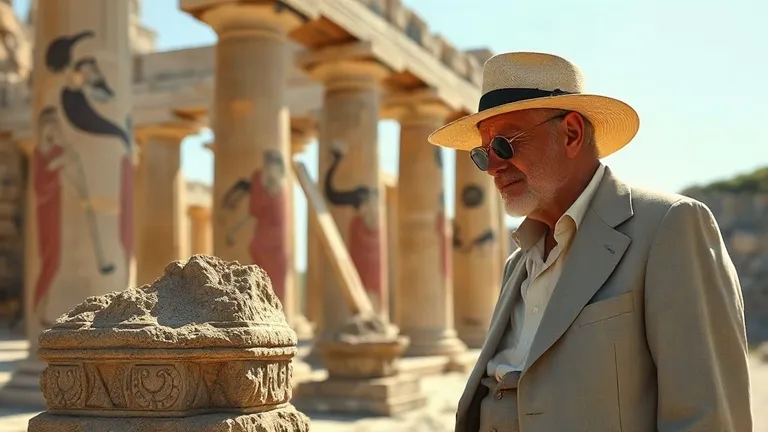
- Stop 4: Knossos, Greece (1900 · Palace Excavation)He began massive excavations on Crete, revealing grand terracotta frescoes, labyrinthine passages, and early written tablet scripts.
Geographic Impact: His excavation of Knossos reshaped European historical geography, moving the recognized cradle of Mediterranean bronze-age civilization centuries further back into antiquty.