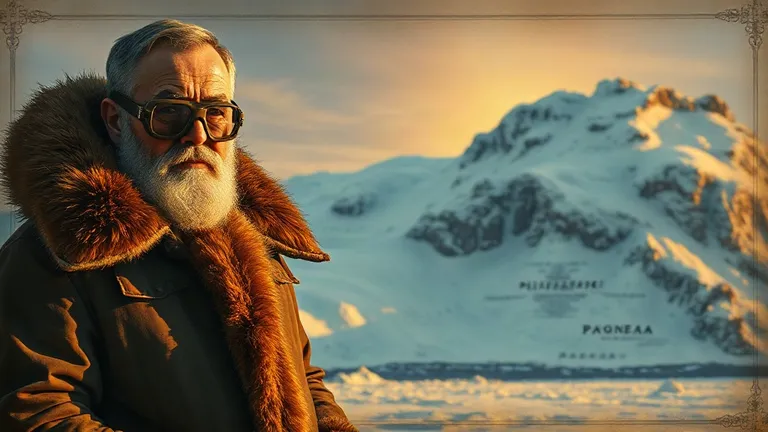
How Geography Shaped Alfred Wegener
Daring polar gales and scientific skepticism, this German polymath realized our continents fit together like giant jigsaw pieces.
- Stop 1: Berlin, Germany (1880 · Academic Beginnings)He studied physics and astronomy in Berlin, developing advanced techniques for tracking upper-atmospheric weather patterns using high-altitude balloons.
- Stop 2: Danmarkshavn, Greenland (1906 · Polar Expedition)He joined his first arctic expedition, building weather stations and studying extreme polar climate dynamics on barren ice.
- Stop 3: Frankfurt, Germany (1912 · Hypothesis Announcement)He publicly presented his radical continental drift theory to the German Geological Society, challenging long-held tectonic assumptions.
- Stop 4: Eismitte, Greenland (1930 · Final Scientific Post)He led a fatal winter resupply trip across the ice sheet, sacrificing his life to support isolated researchers.
Geographic Impact: His revolutionary continental drift hypothesis laid the foundation for modern plate tectonics, fundamentally changing how geoscientists understand the movement of Earth's landmasses.