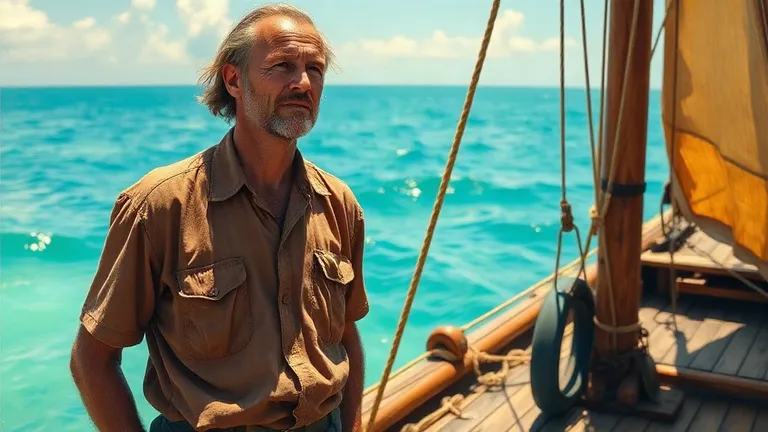
How Geography Shaped Thor Heyerdahl
Challenging conventional academic theories, this bold Norwegian explorer sailed hand-built primitive rafts across immense oceans to prove ancient transoceanic contacts.
- Stop 1: Callao, Peru (1947 · Kon-Tiki Launch)Constructing a raft using native balsa logs without metal fasteners, his crew set sail into the open Pacific currents.
- Stop 2: Raroia Atoll, French Polynesia (1947 · Pacific Landing)Crashing safely onto a remote coral reef after 101 days at sea, he proved ancient South Americans could reach Polynesia.
- Stop 3: Safi, Morocco (1970 · Atlantic Launch)Embarking aboard a papyrus reed vessel built by Indigenous Aymara craftsmen, he aimed to cross the wide Atlantic Ocean.
- Stop 4: Bridgetown, Barbados (1970 · Atlantic Arrival)Successfully sailing Ra II into Caribbean waters, he demonstrated ancient Mediterranean mariners could have crossed to the Americas.
Geographic Impact: His daring experimental voyages demonstrated the drift feasibility of pre-Columbian oceanic contact between South America, Polynesia, and ancient Mediterranean civilizations.