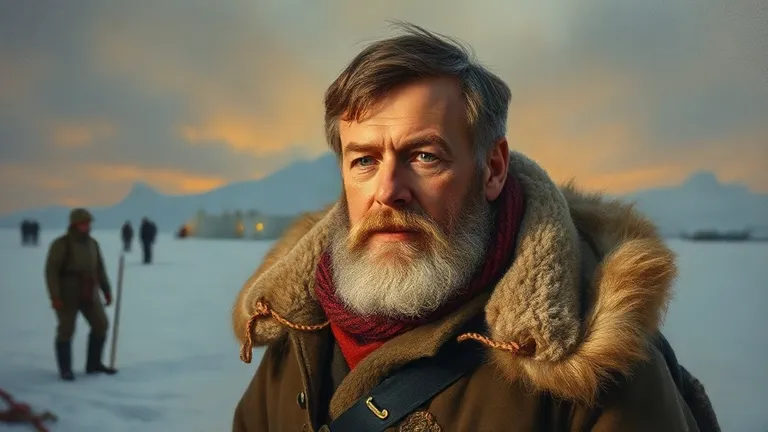
How Geography Shaped Robert Falcon Scott
He dragged heavy sledges across icy high plateaus only to find a rival flag already fluttering in the polar wind.
- Stop 1: McMurdo Sound, Antarctica (1902 · Expedition Base Founder)He established Discovery Hut, setting the baseline for future British scientific and geographic penetration of the frozen southern interior.
- Stop 2: Lyttelton, New Zealand (1910 · Final Departure Port)The Terra Nova loaded final provisions, ponies, and sledge dogs at this harbor before steaming toward Ross Island.
- Stop 3: Geographic South Pole (1912 · Polar Objective Reached)He reached the absolute bottom of the world only to find a Norwegian tent marking a heartbreaking second place finish.
- Stop 4: Ross Ice Shelf, Antarctica (1912 · Final Camp)Trapped by a blizzard eleven miles from a critical supply depot, he wrote his poignant final diary entries.
Geographic Impact: His polar expeditions gathered extensive meteorological, geological, and biological data, fundamentally expanding scientific knowledge of Antarctica's interior plateau.