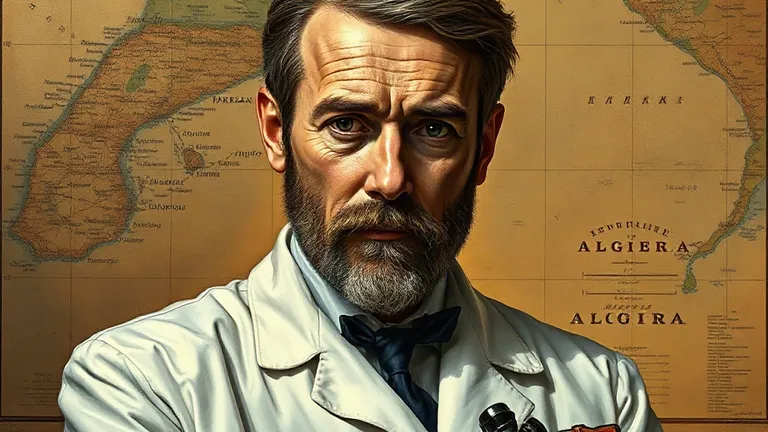
How Geography Shaped Charles Louis Alphonse Laveran
While serving in the heat of North Africa, he discovered the parasite that had long plagued human civilizations.
- Stop 1: Bône, Algeria (1878 · Discovery Site)Stationed in this North African port, he identified the microscopic parasite that was causing widespread illness among soldiers.
- Stop 2: Rome, Italy (1884 · Validation Hub)He traveled to this city to demonstrate his findings to the international scientific community, confirming his revolutionary medical discovery.
- Stop 3: Paris, France (1897 · Research Home)He joined the prestigious Pasteur Institute to continue his vital research into the transmission of tropical parasitic diseases.
- Stop 4: Stockholm, Sweden (1907 · Award Site)He accepted the Nobel Prize in Physiology or Medicine for his groundbreaking work in identifying the malarial parasite.
Geographic Impact: His discovery of the malarial parasite in human blood revolutionized tropical medicine, leading to global public health strategies that saved countless lives and reshaped the development of tropical territories.