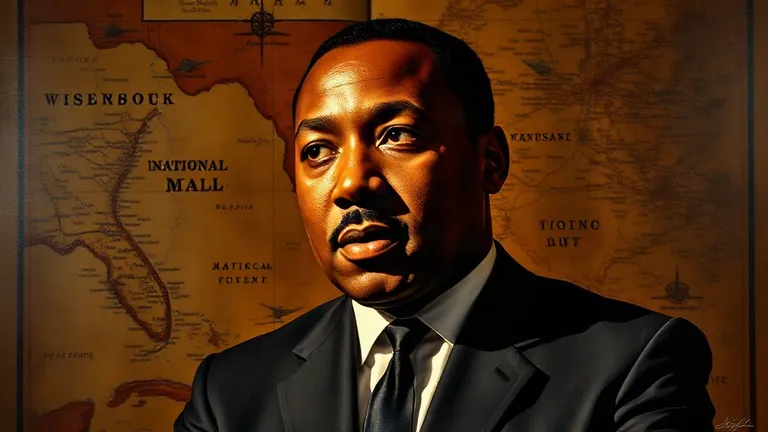
How Geography Shaped M. L. King Jr.
Armed only with moral conviction and nonviolent resistance, he marched across a divided nation to redeem its democracy.
- Stop 1: Montgomery, United States (1955 · Boycott Leadership)As pastor of Dexter Avenue Baptist Church, he organized a landmark boycott integrating public transit systems.
- Stop 2: Washington, D.C., United States (1963 · March on Washington)Speaking before a quarter million citizens at the Lincoln Memorial, he articulated his dream of racial brotherhood.
- Stop 3: Selma, United States (1965 · Voting Rights March)He led historic voting rights marches across Edmund Pettus Bridge toward the state capitol in Montgomery.
- Stop 4: Memphis, United States (1968 · Sanitation Strike Campaign)King rallied striking sanitation workers in Tennessee, delivering his prophetic final speech the night before his assassination.
Geographic Impact: His marches redefined the civic cartography of the American South, turning segregated highways and municipalities into national symbols of freedom and justice.