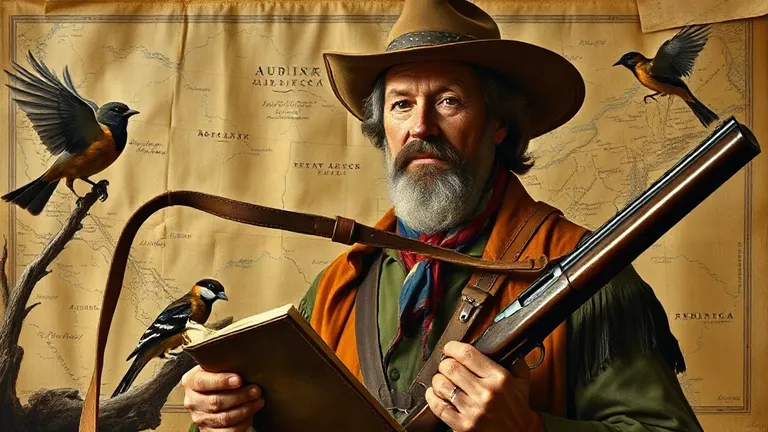
How Geography Shaped John James Audubon
Traversing uncharted American frontiers, this artist captured the vibrant spirit of North American wildlife in breathtaking life-sized illustrations.
- Stop 1: Mill Grove, Pennsylvania (1803 · Early Studies)At his family's estate, he conducted North America's first bird-banding experiments, tracking Eastern Phoebes across seasons.
- Stop 2: Henderson, Kentucky (1820 · Frontier Life)Operating a frontier mill, he roamed the Ohio River valley painting native birds in their natural habitats.
- Stop 3: New Orleans, Louisiana (1821 · Southern Catalog)In the lush Louisiana swamps, he produced some of his finest ornithological watercolors while teaching art classes.
- Stop 4: Edinburgh, United Kingdom (1827 · Masterpiece Publication)Seeking world-class engravers, he found acclaim in Scotland, publishing his massive double-elephant folio volume to global renown.
Geographic Impact: Audubon's extensive fieldwork documented North American avian distribution across rapidly changing ecosystems, leaving an indelible artistic and scientific geographic record.