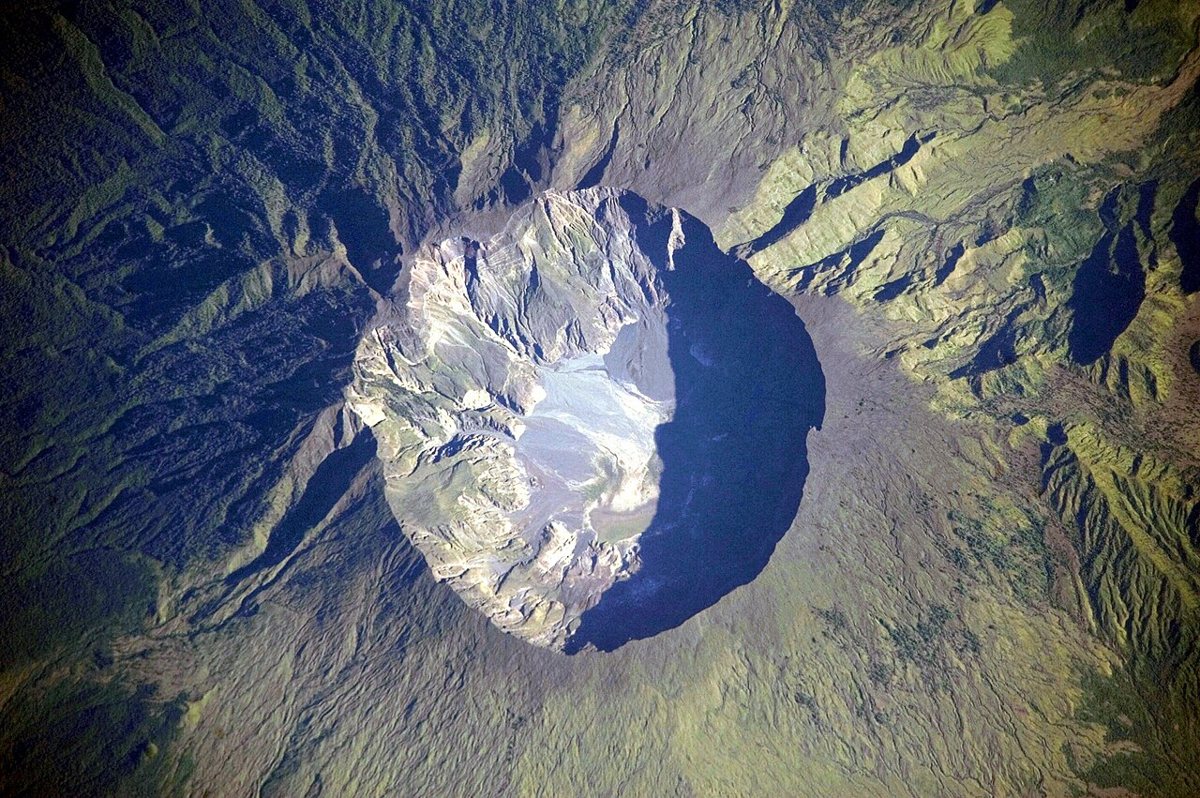
How did Tambora’s 1815 eruption affect places far beyond Indonesia?
Tap to reveal the hidden connection
Volcanic aerosols contributed to widespread cooling — The atmosphere carried the consequences.
- 1. ERUPTTambora erupted in Indonesia in 1815, sending volcanic gases high into the atmosphere.
- 2. SCATTERSulfur-containing gases formed stratospheric sulfate aerosols that reduced incoming sunlight and contributed to cooling far from the volcano.
- 3. EXPERIENCEParts of Europe and North America experienced severe cold and disrupted weather in 1816, remembered as the Year Without a Summer. Effects differed from place to place.
An eruption’s reach can extend far beyond the land it covers.